Tuesday, 7 April 2020

The Archaeology Files - Knowlton Circles

Date of visit: 1 March 2020
Location: 7 miles north of Wimborne Minster, Dorset
Time period: Neolithic, 4,000 BC to 2,500 BC
Type of site: A series of Neolithic henge monuments, the best-preserved of which contains the remains of a Norman church in its centre

Description and observations:
I love Knowlton Circles.  I first came here on an undergraduate fieldtrip with a coachload of other students back in 2003.  We'd been on-the-go all day, and this was our last stop before the journey home.  It was autumn, and the dusk was falling fast upon us, the sun was down, and the sky was silvery-grey.  I looked upon the site in an earthy, reflective mood, and I could almost hear it speaking back to me, the voice of some force from the deep past.  That dusk at Knowlton I experienced an atmosphere that I've never felt before - or since.  I suppose it was there that I first fell in love with the subject of archaeology.


Knowlton Circles from the air, courtesy of English Heritage

Knowlton Circles is a series of four Neolithic (4,000-2,500 BC) henge monuments, sitting in the landscape at the village of Knowlton, midway between Blandford Forum, Dorset, and Ringwood, Hampshire.  Three of them are barely visible now, but the fourth one is beautifully preserved.  Henges are a bit of a mystery to archaeologists - essentially, they are characterised by having a ring-shaped bank and ditch, within which is a relatively flat area (generally considered as more than 20m in diameter - smaller than this and they are termed hengiform monuments; larger and they are known as henge enclosures, such as the enormous example at Avebury.)  Their purpose, like so much in prehistory, is a matter of debate - we've seen in a previous blog how the henge at Maumbury, Dorchester, made a perfect amphitheatre, and this seems like a natural conclusion for other henges too.  We should always be wary of ascribing modern thought processes to the ancient past, so this isn't and shouldn't be the only interpretation, and archaeologists have also suggested ritual use and astronomical observation.  What is agreed upon is that henges weren't occupied, and that they weren't used as defensive structures - not least because (notwithstanding the atypical example of the famous Stonehenge) the ditches of henges just about always occur on the inside of the bank.  It's yet another mystery of prehistory that we can fascinate ourselves with.

Back to Knowlton, where most people's sole interest lies in the fourth henge, also called Church Henge, on account of the fact that in the 12th century, the Normans stuck a church in its centre.  Some commentators believe that the church's location symbolises the transition from Paganism to Christianity, and I suppose it does in a way, although I've no idea if that was the exact intention of the Norman builders, given that England had been largely Christianised since Roman times.  Having said that, something is clearly significant or spiritual about the site, which made it the right spot for Christian worship, and this is supported by the discovery, in 1958, of 16 Anglo-Saxon burials just to the east of the henge.  The church itself was extensively remodelled in the centuries following the Norman Conquest, and despite the fact that the village was utterly devastated and left virtually deserted by the Black Death in the 14th century, the church continued to hold a congregation until the roof collapsed in the 18th century.


Knowlton Church within its henge

There's an irony to the idea that a church which was built to stamp on the identity of an ancient religion, now lies in ruins alongside it, and I don't think this should be overlooked when trying to describe the atmosphere of the site.  My recent visit was on a bright, crisp March morning and I felt the site in perfect tranquillity, and would have been happy to linger.  But some say that ancient melancholy hangs in the air here, and the site is reported to be one of the county's most haunted, with legends of phantom horsemen, a ghostly face that appears in the tower's top window, and the kneeling figure of a weeping woman, or nun, trying to purge herself of some unknown sin.  I think for some, the unique atmosphere of Knowlton is rationalised through ghost stories, whereas my personal belief is that the history and ancientness of a place naturally means it will absorb the energy of human activity over the millennia.  I'm pretty sure this is what I've felt on my visits here, to this wonderful, spiritual place.


The ruins of Knowlton Norman church

Sunday, 5 April 2020

Reasons to be cheerful III

Number one - cooking.  Well this peculiar time has given us the opportunity to spend more time in the (unfinished) kitchen, and the chance to cook up vibrant and tasty dishes.  This week it has been baked tomatoes in tortilla wraps; sloppy Joes; and homemade huevos rancheros.  Bellissimo!


Number two - camellias.  They're at their best right now, and they're providing a very welcome boost of colour to the early spring garden.  In fact, the garden as a whole has waltzed out of its winter shroud and has been basking in the April sunshine.  Bellissimo, bellissimo!


Number three - Lego pirates.  Lego's newest set is based on the narrative that the iconic "Black Seas Barracuda" pirate ship (released by Lego 30 years ago) has finally turned up shipwrecked, with the Lego pirates still on board.  Lego tapping into the absolute heart of their customer base, this is the best advert you'll see this year, and one that marketing students will study for years to come.  A real tear-jerker!  Watch it online.


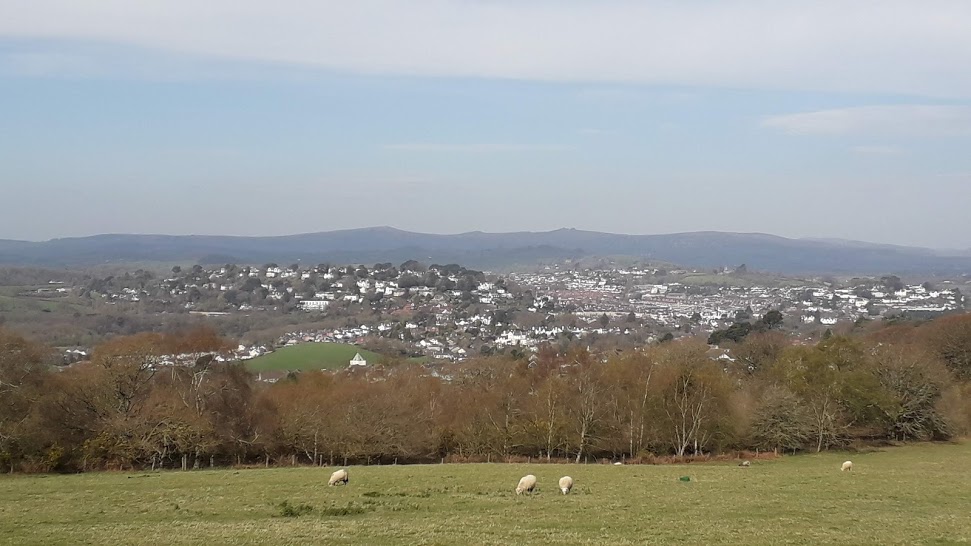
Number four - beautiful views.  This is my hometown from Milber Down hillfort, where we took our once-a-day walk today.  Bellissimo, bellissimo, bellissimo!


Monday, 30 March 2020

Pottery People - the Dixon family

226 years ago today, Thomas Dixon was baptised in All Saints Church, Madeley, Shropshire.  The Dixons appear to have been a family steeped in the pottery industry.  We know nothing of Thomas's life up until his marriage to Sarah Ann Beddow, in 1825, in the nearby town of Broseley, but we can assume he had spent his younger days perfecting his artistic craft, for after he moved to Broseley (or possibly before) he began work as a china painter specialising in porcelain.  This meant Thomas would be carefully adding the colour and patterns to the pottery product.  It's likely that this is how Thomas met Sarah Ann Beddow, for she was also employed in the industry, as a burnisher of gold.  This fascinating job saw her applying loose sheets of gold onto clay, and polishing it to obtain a smooth and shiny effect.  Such a job would have taken great skill, and with costly materials, her employer clearly had strong faith in Sarah's abilities. 

There's no documentary evidence to support this conclusion, but the couple's location in Broseley puts them on the doorstep of the famous Coalport pottery works, and given the skills involved, it seems very likely that this was where Thomas and Sarah worked.  The Coalport works sprung up in 1795, when Thomas was a baby, eventually absorbing other local pottery manufacturers, so that by the time Thomas was an adult, the Coalport pottery works were the main players in the area.  Coalport became the market leader in decorated porcelain at this time, and Thomas and Sarah would have been turning their hand to all manner of patterns and techniques - this included rococo shapes and flower-encrustation, as well as "Japan patterns" with a deep underglaze blue, with overglazed red, green and gilt embellishments.


Engraving of the Coalport pottery works in 1820

Thomas and Sarah had eight children in the course of their marriage - my family line runs through their eldest child, Eliza Ann Beddow Dixon.  Artistic flair clearly ran in the family - in her early 20s, Eliza also began work as a pottery burnisher, polishing clay pots to reduce porosity.  This would probably have been done with other women and children, working under the watchful eye of the superintendent.  Eliza was joined in this work by two of her sisters, E. Ann and Sarah (aged only ten when she began this work).  Meanwhile, one of their brothers, William, was busy learning his trade as an artist and a sculptor.

We don't know ever so much more about Thomas and Sarah Dixon, but they have made for some fascinating research, and hold a unique position in my family history for being line of work, when many others were still employed as general agricultural labourers.

Sunday, 29 March 2020

Reasons to be cheerful II

Number one - pulmonaria.  One of my favourite spring flowers is in bloom right now.  Pulmonaria, also known as lungwort, pokes its blue-purple heads up in March to offer a welcome relief from the winter weather.  It cheers me up massively to see if come back, and is also a must-visit for the local bee population, so it's very much win-win.


Number two - tadpoles.  Ok, so I did mention them in passing last week, but it's the first year that frogs have actually spawned in my container pond, so this is a big deal for me.  I spent a time today peering into the pond and watching them, go about their own little lives in complete oblivion to the wider world.  It's not only a reminder that life will go on, but it also reinforces the optimism that there are things to look forward to - like watching these little critters turn into frogs, by which time hopefully things will be back to normal for us, too.


Number three - Roman Britain.  I'm really enjoying the book Roman Britain, A New History, by Guy de la Bédoyère.  It's a delve into what I think is the most interesting period of British history, and a fascinating exploration of the governance, military activities, and urban and rural life of Britain under Roman rule.


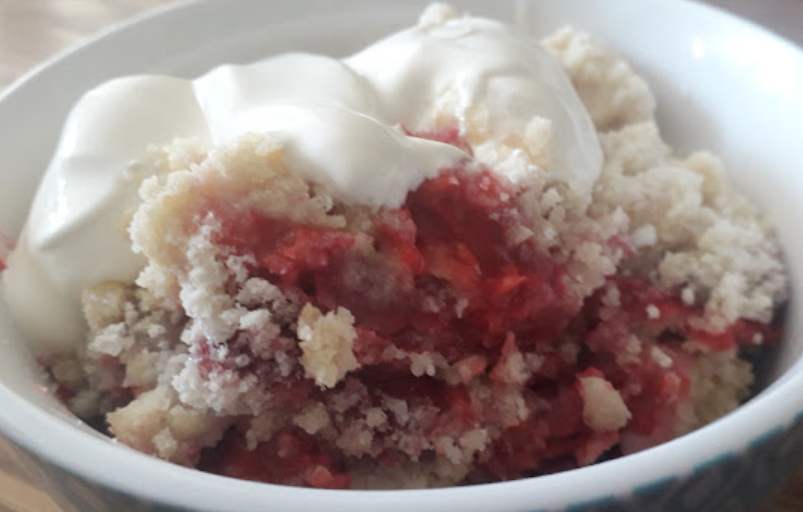
Number four - crumble.  My wife makes the best crumble, and she made one today.