Sunday, 17 September 2017

Football legends, Lego style

So, the football season has started, and with it comes all the nostalgia of the years gone by.  A quiet afternoon at home made me think about some of football's most iconic photos, and after a quick search around the world wide web, it seemed only natural to let the cast of Lego Town Football Club take on a grand re-staging.  Here's some of my favourite iconic images transformed into Lego.  What's your favourite football photo?

1.  Leeds United's Don Revie and Billy Bremner with the FA Cup, 1972


2.  Paul Gascoigne's 'Dentist's Chair' celebration, 1996


3.  Barcelona's 'Holy Trinity' - Suarez, Neymar, Messi, 2015


4.  Vinnie Jones and Paul Gasgoigne - say no more, 1988


5.  Diego Maradona versus Belgium, 1982


6.  Bobby Moore lifts the World Cup for England, 1966

Thursday, 24 August 2017

Late summer theatre

We've reached this point in the year.  The garden, mature, wise, and brimming with confidence is reaching its crescendo, the long-awaited final explosion of colour, the finale of the season, which brings its hottest, most intense and evocative assault on the senses.  No room here for the subtlety of spring past, nor yet for the mellowness of Autumn to come - it's here and now, it's fire-bright, and it's sizzling away in the late summer sun.

Many of my favourite flowers are coming into season right now.  First off, echinacea, a well-known summer staple these days, but one of my most-loved because of its enduring flowers, which should continue uninterrupted to the first frosts.  I can't get enough of their lovely flowers, whose seed heads grow more pronounced with age, and attract a plentiful supply of pollinators, including our resident population of gatekeeper butterflies.  Secondly, echinacea's native American cousins, rudbeckia, which comes in a whole range of varieties, some of which seem particularly tasty to the local slug population.  The standard is Rudbeckia goldsturm, whose cheery yellow flowers please the soul, but there are many others, including prairie sunset, summerina, and toto.  My experience this year tells me that slugs and snails are much more drawn towards these fancy varieties - and not just towards the leaves - flower heads are grazed bare, and new buds chomped down before ever having the chance to open.  Nonetheless, there are some things you just have to accept when gardening, and at least by focussing on these plants, the pests are ignoring several others.


What I love about my herbaceous border this year, is the way that it seems to be blending so effortlessly with the woodland bank beyond.  They are, of course, two totally different worlds - one natural and native, the other naturalised but undeniably artificial - but it has been a key aspect of how I am gardening here to blend the two, whilst simultaneously acknowledging their difference.  I liken this border to the old-fashioned country cottage garden, sitting on the periphery of the countryside proper.  To this end, I've got hold of three climbing frames that resemble, in my mind, the windows of an old abbey.  It forms a barrier through which the oak tree can casually poke its new leaves, and upon which honeysuckle can clamber to its heart's content.  It feels like a little bit of old England, a place through which a medieval monk would perhaps once have strolled.


Meanwhile down on the deck, I've been busy creating a little area that I call "the plantsman's corner."  It's sited on our lower deck, where you can easily be hit in the head by tumbling buddleia flowers, providing a real hideaway from the rest of the garden, if not the entire neighbourhood.  It has completely changed the feel of this little corner, turning it into a restful space in which I want to actively sit, to watch the world go by, listen to the bees, or read a book.  It's now home to my autumn raspberry pot, asters, heucheras, and an interesting variety of penstemon - penstemon digitalis - worth a place for its foliage alone, with its deep crimson and green leaves contrasting each other to perfection.  I also popped in a lovely red echinacea here, although as per the above paragraph, it has already felt the full weight of the slugs' appetite, who have eaten entirely through its blooms.


Finally today, and to our next instalment of "nicking other people's gardens and pretending they're part of your own," here's next door's stunning kniphofia, a patch which came up a couple of weeks ago, and have had me mesmerised ever since.  The 25-or-so flower heads are enough to make me (proud owner of one flower earlier this summer) mad with envy.  It seems to me that few flowers look so good in a clump as the red hot poker, and this really is a lovely little patch - something to aim for with my own stock next year.


Late summer is a beautiful, but fleeting, time of year.  With my planting scheme, it's the real star towards which I've been aiming since March, but now that we're here, you can almost feel the tremble of the earth, as Autumn begins its slow encroachment.  Blackberries are ripening fast, the leaves of the blueberry bushes are slowly fading into sunset tones, and there's a distinct increase in the number of spiders spinning webs across the pathways and between tree branches.  I caught this one sitting patiently across our wildflower patch - it's a sure sign of where we are in the season.


Friday, 28 July 2017

Knight Time

We love a good art trail here on Nich About Town. I mean, we really love a good art trail.  Seriously, we just love a good art trail.  So it should come as no surprise that, when the city of Lincoln put together their very own knights trail, we just had to get up there and see what all the fuss was about.  The trail commemorates the 800th anniversary of the (second) Battle of Lincoln, in which the barons of England, largely reunited after the death of their bitter enemy King John, rose to fight for the nine-year-old King Henry III, against Prince Louis of France, who had entered London and proclaimed himself King of England.  At the time of the battle - May 1217 - Lincoln Castle (a strategically important site) was under siege from the French forces, but William Marshal, first Earl of Pembroke, was mobilising an army of knights to join him in nearby Newark, to march to Lincoln and relieve the castle.  Their campaign was a success, although ironically they took revenge on the people of Lincoln, who they believed had aided the French troops, by sacking the city.

There's a second part to this story, also being celebrated along the trail.  Following the establishment of Henry III as king, the Charter of the Forest was sealed in November 1217.  The Charter, sealed under the regency of the aforementioned William Marshal, re-established the rights of access to the royal forest, which had been eroded by William the Conquerer.  The charter, often overlooked in British history, provided real rights and protections for common men in England, against the abuses of the aristocracy, allowing various activities around gathering fuel, charcoal burning, pasture, grazing, and cutting turf.  This was economic protection for free men - a unique document in its time.

In total, there were 36 knights to discover, spread across the city centre, from the Cathedral Quarter on the top of the hill, to the Brayford Pool at the bottom, with Lincoln's famous and aptly-named Steep Hill sandwiched between the two.  Our trail began at the top, and there was an appropriate reminder that we are but a handful of miles from Sherwood Forest, with Lincoln Green, a knight celebrating the legendary outlaw, complete with bow and arrows.


In the shadow of the great cathedral - a real marvel in its own right - sat several more knights on our trail.  My eye was particularly drawn to the knight called Inside Out, created by an artist truly inspired by both the interior and exterior of the cathedral.  On one side, the flying buttresses and vaulted ceiling are displayed in stunning detail, whilst on the other, the beauty of Lincoln's stained glass windows - and in particular, the legend of that most curious characters, the Lincoln Imp.  Legend says that two imps were sent to Earth to do the Devil's work in the 14th century, and on wreaking havoc in Lincoln Cathedral (in which they smashed tables, threw rocks, and tripped up the Bishop!) one was turned to stone by an angel.  The second was given the chance to escape, but is said to return to the cathedral, creating a draft as it circles the building in search of its missing comrade.


Leaving the cathedral and heading towards Lincoln Castle, we almost immediately run into Knight of the Skies, which pays homage to the region's wartime heritage and association with Bomber Command.  It's a regular theme around the whole city, for there were several airfields in Lincolnshire from where RAF pilots set off during the dark days of war, many never to return again.  The knight's shield proclaims the motto of Bomber Command - Strike Hard, Strike Sure - whilst the artist has gone to some length to portray the crew returning from a night of horror in the skies, walking amongst the poppies to commemorate the fallen.


Down the hill, just outside Lincoln's fabulous archaeology museum, sits another of my favourites, named The Luttrell Psalter.  The design is based on a Medieval text of the same name, which was produced in Lincolnshire in the 1300s, and is considered one of the most important documents of the period.  The knight's design features all manner of mythical and wondrous creatures, the sort that dwell deep in the forests, mountains and swamps of 14th century England.  To me, it evokes an age before we knew so much, when imagination turned the mundane into mystery.  The artist apparently applied an ageing technique to the painting, in order to give a unique appearance.


If one knight was designed to provide a centrepiece for the entire trail, it would have to be Knight in the Forest, a beautifully-decorated sculpture which displays the native flora and fauna that can be seen around Lincolnshire and beyond.  It isn't a stretch of the imagination to transport yourself back to the ancient forests, where our badgers, foxes, deer, squirrels and owls roam freely, threatened only by the appearance of the occasional woodsman.  Stunningly designed, an easy favourite that perfectly sums up the trail - and the Charter of the Forest - to me.


Ok, so there's one more knight worthy of mention as, following on from Lincoln City FC's remarkable 2016-17 season, they also put one together in red-and-white stripes.  Remembering some of Torquay's encounters with Lincoln in the past, a sword-wielding knight certainly wouldn't look too out of place in their defence, and although I'm not completely sure about the lipstick, there's no denying that the football club has been a source of great celebration here recently, which lends itself nicely to a trail celebrating the city's long and fascinating history.


Of course, there were several other knights all worthy of mention, but I'll leave you to see what you think of the rest, by visiting my Flickr album.  As for me - well, after a tiring day hiking around trying to spot them all, there's only one real choice of drink for the evening - A Knight's Ale, available from the Lincoln Castle shop.  You know it's going to be a good mix when an art trail meets with a good delve into English history - thanks Lincoln, always a pleasure.

Sunday, 9 July 2017

Thomas Mussell's stray bullet


The next instalment of family history takes us back to 1839, to the Wiltshire village of Downton in the northern New Forest.  Here, a 38-year-old Thomas Mussell lived with his second wife Charlotte and five young children.  Thomas was a lifelong resident of the forest - he was born there, and he later died there, so it was only natural that he should find employment there, working at this time as a woodsman.  We don't know for whom Thomas worked, but he would have been employed by a local landowner, on an estate that drew its income from the sale of wood.  In the course of a typical day, Thomas' work would probably have been very varied - he would have been responsible for looking after and maintaining young trees, and keeping a constant supply of wood that could be felled and sold to coppice dealers, merchants, and craftsmen.  Many woodsmen were also charcoal burners and gamekeepers, and it is likely that Thomas' role incorporated all of these.

Certainly, we know that Thomas knew his way around a gun, and controlling the local deer population was another job set by his employer.  This took a rather grisly turn on the evening of Monday 15 April 1839, as was described in the Devises and Wiltshire Gazette:


Of course, in the eyes of the justice system, the blame for this tragedy was laid squarely at the door of the deceased, Ann Hayter, who "had no doubt been stealing the wood." Because of this, no charges were brought against Thomas, but a deodand of one shilling was imposed.  A deodand was an article that, having caused the death of a human being, was forfeited to the crown and put to pious use.  In reality, this took a form of a fine. Interestingly, deodands were abolished seven years later, in 1846.

As for Thomas; he continued to work as a woodsman in the New Forest until his death in 1885.  He had ten children in total - two with his first wife Sarah (who incidentally died in childbirth, and was laid to rest on the same day as the child, also named Thomas, was baptised in 1832) and a further eight with his second wife, Charlotte.  Thomas' relationship to me is through my paternal grandmother - Thomas is my great-great-great-great grandfather.

Edgar Barclay's 1901 painting, Children of the New Forest, evokes the memory of Ann Hayter

Monday, 19 June 2017

Scenes from the June wildlife garden

It has been a busy old time in the garden, as we fly out the exit doors of Spring and through the entrance gate to summer.  June is a wonderful month, easily my favourite of the season, for it is filled not only with abundant colour, light, warmth and blooms, but also with plenty of promise for the weeks ahead, which stretch unbroken into Autumn.  It's a delight to be in the garden at the moment, to savour that feeling of excitement and preparation, to be absorbed in the almost tangible rate of growth pulsing through every inch of the plot.  But first, what's this on the horizon?  The rose chafer, making its first ever appearance in the garden, a metallic green beetle with a loud buzz as it flits around the place.  Like other chafers, the larvae spend some years in the ground, emerging only when the time is right - and as such, I can only conclude that this year must be a good one for roses, its primary food source.  Ours have certainly come out in force - well, at least for now.


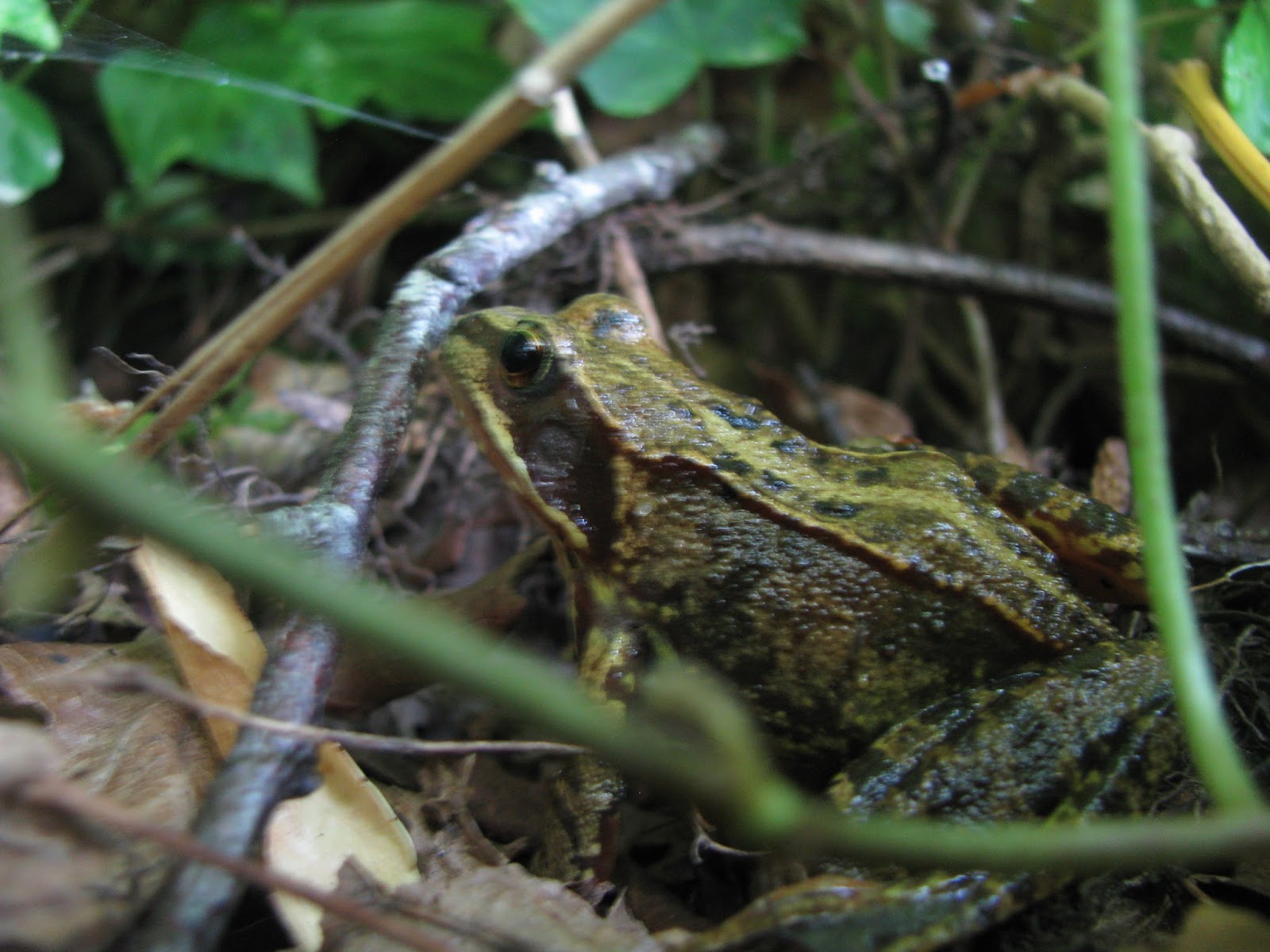
Wildlife, as always, takes the number one spot in our garden, and as we work to establish an ever-richer environment, so the rewards keep on coming.  Slow worms are a common sight in the compost bin these days, and there's nearly always at least one frog in the container pond (although sadly I noticed one with an injured leg the other day, which I soon found had died, the result of a tussle with a nuisance cat, I expect.)  We've plenty of space set aside for all manner of creatures, and although butterflies are sadly lacking this year, I am cheered by the sheer volume of bees we've had all over the place - on the cotoneaster; the meadow cranesbill; the scabious and the geums.  Foxgloves - and we have many - are another popular choice, and a firm staple of the woodland garden, sitting as they do in perfect balance with their surroundings, as if they have been growing here for eternity.  Does one plant more sum up early summer?


Wildflowers are of immense importance to me, and consequentially I have an abundance of them in every available space.  Red campion, a hedgerow staple (certainly near us) grows well here, its pink petals adding an overarching natural feel to the back of the garden, which I really just love.  At the front of the garden, meanwhile, the wildflower "meadow" is coming on leaps-and-bounds, and in addition to ox-eye daisies, dandelions and (more) foxgloves, there's birdsfoot trefoil, field scabious, and knapweed, the latter of which has just come into flower, a striking thistle-like appearance, and one said to be highly attractive for bees.


 Up in the centre of the plot, the herbaceous border is coming along a treat - echinacea buds are forming, coreopsis flowers are almost out, whilst one of my favourites, erigeron Sea Breeze, already has a month's flowering under its belt, with no real signs of stopping.  The red geraniums are also putting on a mighty display, dotted in amongst the perennials to provide flashes of colour in amongst the melee.  For the first time in this garden, I think I've got it just about right, and am expecting a continuous supply of colour - of one type or another - from now until the first frosts, which is great for the garden, brilliant for bees, and marvellous for my own enjoyment.  Just one final word here, as I've just introduced a couple of eryngium plants - or sea holly - which I've often admired when seeing it out and about.  Another one for bees, it certainly adds its own architectural form to the border, and I look forward to seeing its steely blue intensify as the summer grows old.


Things are moving fast and ever forward in the garden, and there's that sense of transience with every passing day and each spent bloom, that nothing lasts forever.  The foxgloves are already bending over, losing their petals and forming their seeds, yet in their wake we will inevitably see other shades of newness, new shapes of flowers, different scents and smells, and another type of summer opening up before our eyes.  It's bitter-sweet, for with every fond farewell there is a happy hello, all wrapped up in the rhythm of nature that connects us with the earth and our place in the world.