Sunday, 9 July 2017

Thomas Mussell's stray bullet


The next instalment of family history takes us back to 1839, to the Wiltshire village of Downton in the northern New Forest.  Here, a 38-year-old Thomas Mussell lived with his second wife Charlotte and five young children.  Thomas was a lifelong resident of the forest - he was born there, and he later died there, so it was only natural that he should find employment there, working at this time as a woodsman.  We don't know for whom Thomas worked, but he would have been employed by a local landowner, on an estate that drew its income from the sale of wood.  In the course of a typical day, Thomas' work would probably have been very varied - he would have been responsible for looking after and maintaining young trees, and keeping a constant supply of wood that could be felled and sold to coppice dealers, merchants, and craftsmen.  Many woodsmen were also charcoal burners and gamekeepers, and it is likely that Thomas' role incorporated all of these.

Certainly, we know that Thomas knew his way around a gun, and controlling the local deer population was another job set by his employer.  This took a rather grisly turn on the evening of Monday 15 April 1839, as was described in the Devises and Wiltshire Gazette:


Of course, in the eyes of the justice system, the blame for this tragedy was laid squarely at the door of the deceased, Ann Hayter, who "had no doubt been stealing the wood." Because of this, no charges were brought against Thomas, but a deodand of one shilling was imposed.  A deodand was an article that, having caused the death of a human being, was forfeited to the crown and put to pious use.  In reality, this took a form of a fine. Interestingly, deodands were abolished seven years later, in 1846.

As for Thomas; he continued to work as a woodsman in the New Forest until his death in 1885.  He had ten children in total - two with his first wife Sarah (who incidentally died in childbirth, and was laid to rest on the same day as the child, also named Thomas, was baptised in 1832) and a further eight with his second wife, Charlotte.  Thomas' relationship to me is through my paternal grandmother - Thomas is my great-great-great-great grandfather.

Edgar Barclay's 1901 painting, Children of the New Forest, evokes the memory of Ann Hayter

Monday, 19 June 2017

Scenes from the June wildlife garden

It has been a busy old time in the garden, as we fly out the exit doors of Spring and through the entrance gate to summer.  June is a wonderful month, easily my favourite of the season, for it is filled not only with abundant colour, light, warmth and blooms, but also with plenty of promise for the weeks ahead, which stretch unbroken into Autumn.  It's a delight to be in the garden at the moment, to savour that feeling of excitement and preparation, to be absorbed in the almost tangible rate of growth pulsing through every inch of the plot.  But first, what's this on the horizon?  The rose chafer, making its first ever appearance in the garden, a metallic green beetle with a loud buzz as it flits around the place.  Like other chafers, the larvae spend some years in the ground, emerging only when the time is right - and as such, I can only conclude that this year must be a good one for roses, its primary food source.  Ours have certainly come out in force - well, at least for now.


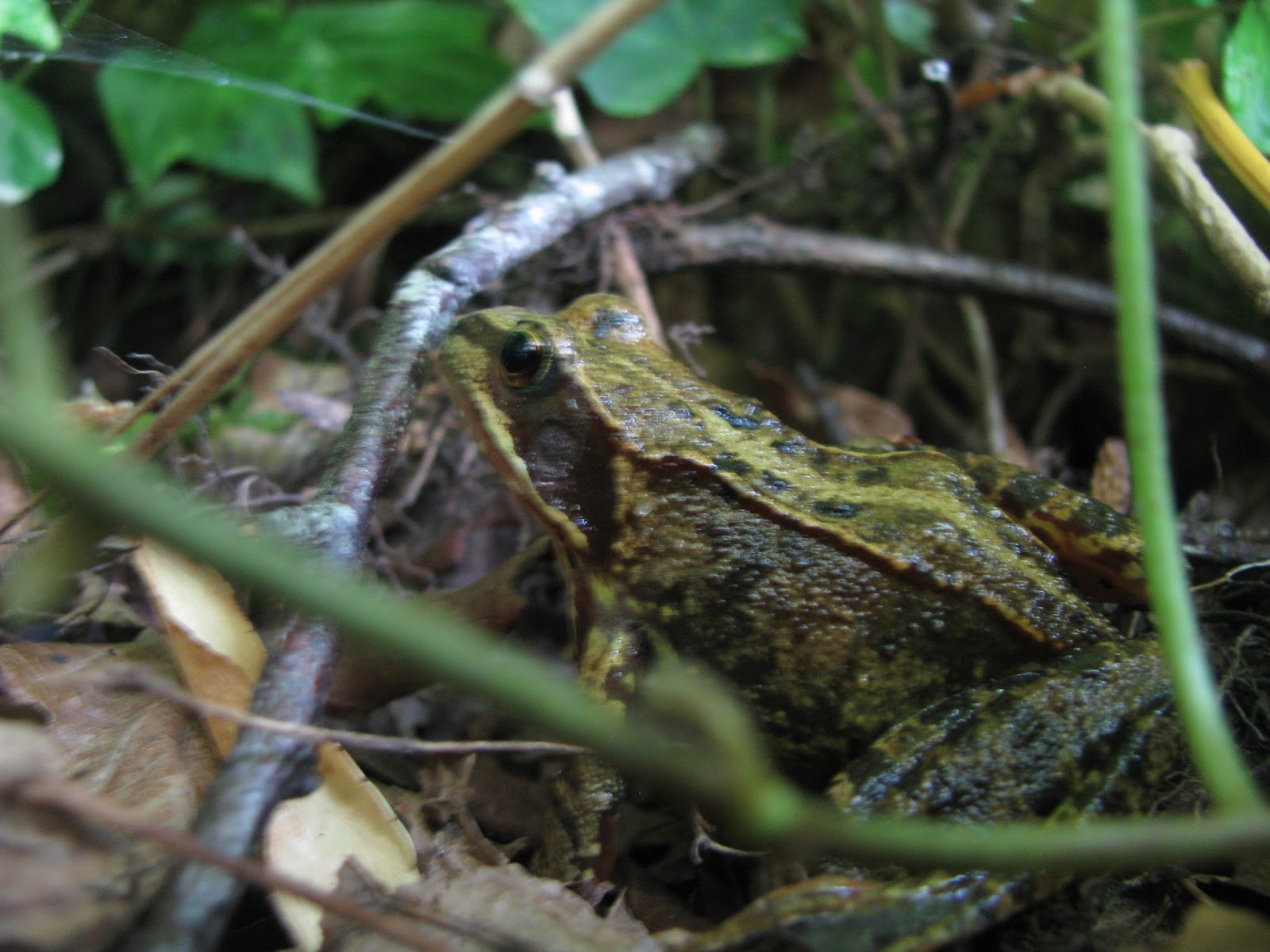
Wildlife, as always, takes the number one spot in our garden, and as we work to establish an ever-richer environment, so the rewards keep on coming.  Slow worms are a common sight in the compost bin these days, and there's nearly always at least one frog in the container pond (although sadly I noticed one with an injured leg the other day, which I soon found had died, the result of a tussle with a nuisance cat, I expect.)  We've plenty of space set aside for all manner of creatures, and although butterflies are sadly lacking this year, I am cheered by the sheer volume of bees we've had all over the place - on the cotoneaster; the meadow cranesbill; the scabious and the geums.  Foxgloves - and we have many - are another popular choice, and a firm staple of the woodland garden, sitting as they do in perfect balance with their surroundings, as if they have been growing here for eternity.  Does one plant more sum up early summer?


Wildflowers are of immense importance to me, and consequentially I have an abundance of them in every available space.  Red campion, a hedgerow staple (certainly near us) grows well here, its pink petals adding an overarching natural feel to the back of the garden, which I really just love.  At the front of the garden, meanwhile, the wildflower "meadow" is coming on leaps-and-bounds, and in addition to ox-eye daisies, dandelions and (more) foxgloves, there's birdsfoot trefoil, field scabious, and knapweed, the latter of which has just come into flower, a striking thistle-like appearance, and one said to be highly attractive for bees.


 Up in the centre of the plot, the herbaceous border is coming along a treat - echinacea buds are forming, coreopsis flowers are almost out, whilst one of my favourites, erigeron Sea Breeze, already has a month's flowering under its belt, with no real signs of stopping.  The red geraniums are also putting on a mighty display, dotted in amongst the perennials to provide flashes of colour in amongst the melee.  For the first time in this garden, I think I've got it just about right, and am expecting a continuous supply of colour - of one type or another - from now until the first frosts, which is great for the garden, brilliant for bees, and marvellous for my own enjoyment.  Just one final word here, as I've just introduced a couple of eryngium plants - or sea holly - which I've often admired when seeing it out and about.  Another one for bees, it certainly adds its own architectural form to the border, and I look forward to seeing its steely blue intensify as the summer grows old.


Things are moving fast and ever forward in the garden, and there's that sense of transience with every passing day and each spent bloom, that nothing lasts forever.  The foxgloves are already bending over, losing their petals and forming their seeds, yet in their wake we will inevitably see other shades of newness, new shapes of flowers, different scents and smells, and another type of summer opening up before our eyes.  It's bitter-sweet, for with every fond farewell there is a happy hello, all wrapped up in the rhythm of nature that connects us with the earth and our place in the world.

Tuesday, 30 May 2017

Goodbye, my Coney Island baby

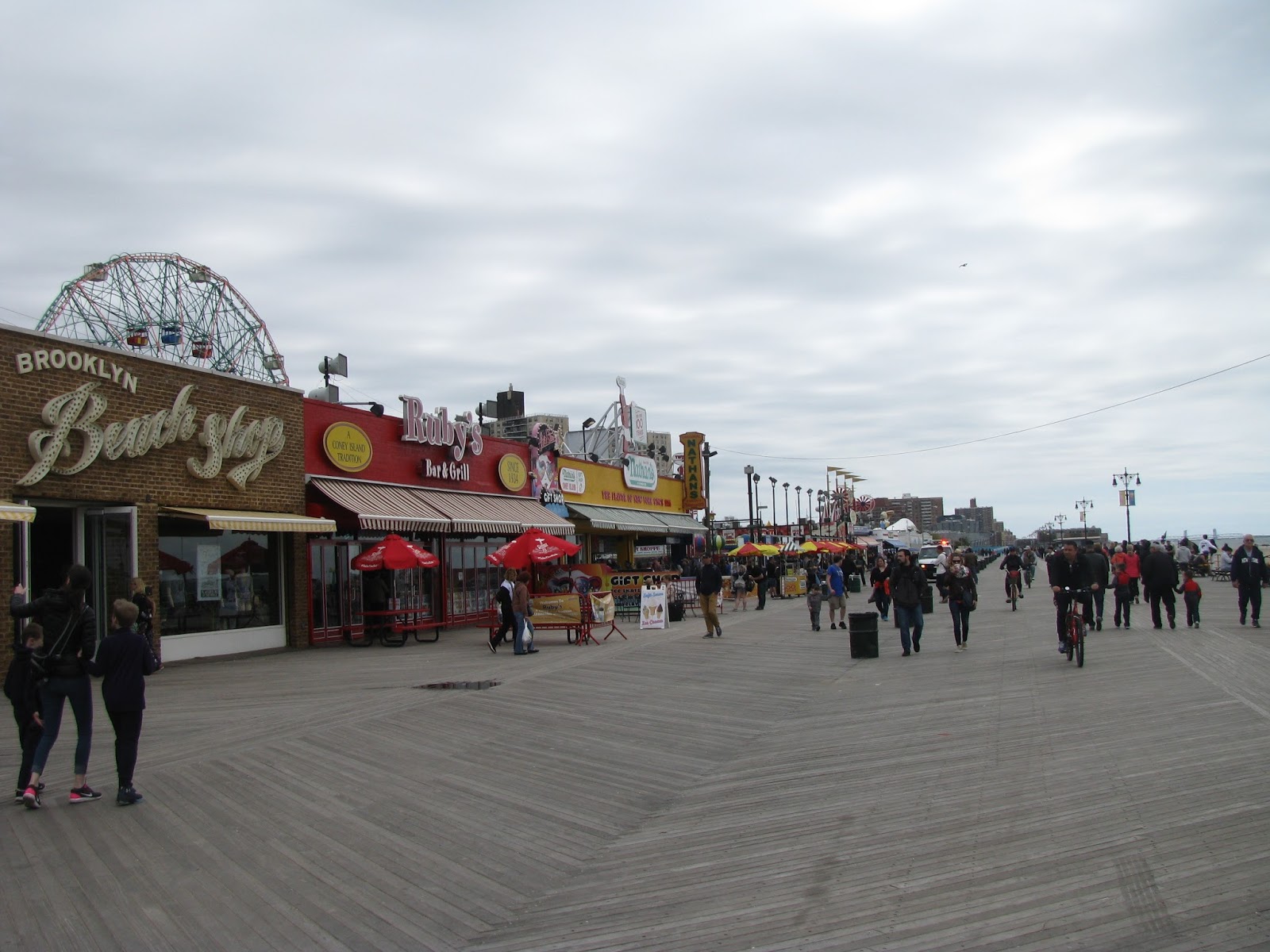
Our final full day in New York sees us jump on the subway for the 45-minute ride out to Coney Island, the self-proclaimed Playground of the World.  We've been lured here by the promise of good, old-fashioned American family fun, an iconic boardwalk, and throwbacks to the roaring 20s, when promenades along the beach and all-in-one stripy swim suits were very much the rage.  By the looks of it, the seaside resort does get very busy in the summer months, as New Yorkers make the short trip out to enjoy building sandcastles and taking a dip in the North Atlantic, but on our April visit, a biting wind cuts across much of the sun's warmth, blowing sand into our eyes, and rendering the beach virtually out of bounds.  Nonetheless, the boardwalk has its own charm, and the variety of shops offer up a few different souvenirs for the discerning tourist.


Coney Island boardwalk
A Coney Island map

First stop, offering shelter from the wind, is the New York Aquarium.  Formerly situated in Battery Park (see Following the Immigrants) the aquarium moved to this coastal location in 1957, and is now part of the Wildlife Conservation Society (WCS) which also oversees the city's other zoos.  The aquarium was rocked in 2012, when it suffered significant damage from Hurricane Sandy, flooding the facilities and shutting down the power supply.  Although staff who remained on-site at this time were able to save 90% of the creatures held there, the ramifications of the storm are still clear for all to see.  An enormous rebuild is therefore underway - even more than four years later - which understandably leaves some of the site inaccessible.


An old-fashioned aquarium mural

What the aquarium does have, however, is a wonderful array of tanks, amongst the very best that I have seen.  In Conservation Hall, we are taken on a journey around the world - the Amazon basin, the African lakes, coral reefs (the aquarium grows its own coral, aiding its sustainability agenda) and marine environments giving a flavour of the wondrous life that exists beneath the waves.  In fact, I've been so impressed by what I've seen, that I've since tried to remodel my own tank on their Amazon biotope.  Outside, there are penguins, sealions and otters, and a large circular tank housing small sharks, a temporary solution until the Ocean Wonders habitat is completed.  The aquarium is also planning an underwater viewing area for the penguins, an Explore the Shore coastal section, and an Alien Stingers exhibit.  Lots more to come back to one day, as they continue their recovery from the deadly force of nature.

A beautiful Amazon tank
A home-grown coral reef

Back on the boardwalk, and there's only one real choice for lunch - Nathan's Famous, who have been feeding this part of Brooklyn with old fashion hot dogs since 1916.  The brand is a popular one, and an American institution - they are the official hot dog providers to the New York Mets and New York Yankees baseball teams - located as they are in an unmissable yellow building, in front of which a sizable crowd is gathered.  We join the queue, and two cheese dogs later, we're pretty satisfied.  Looking around, we also realise that we've ordered on the lighter side, for the food is flying out of the kitchen, and some diners are tucking into weighty portions.

Nathan's Famous of Coney Island
Cheese dogs and fries

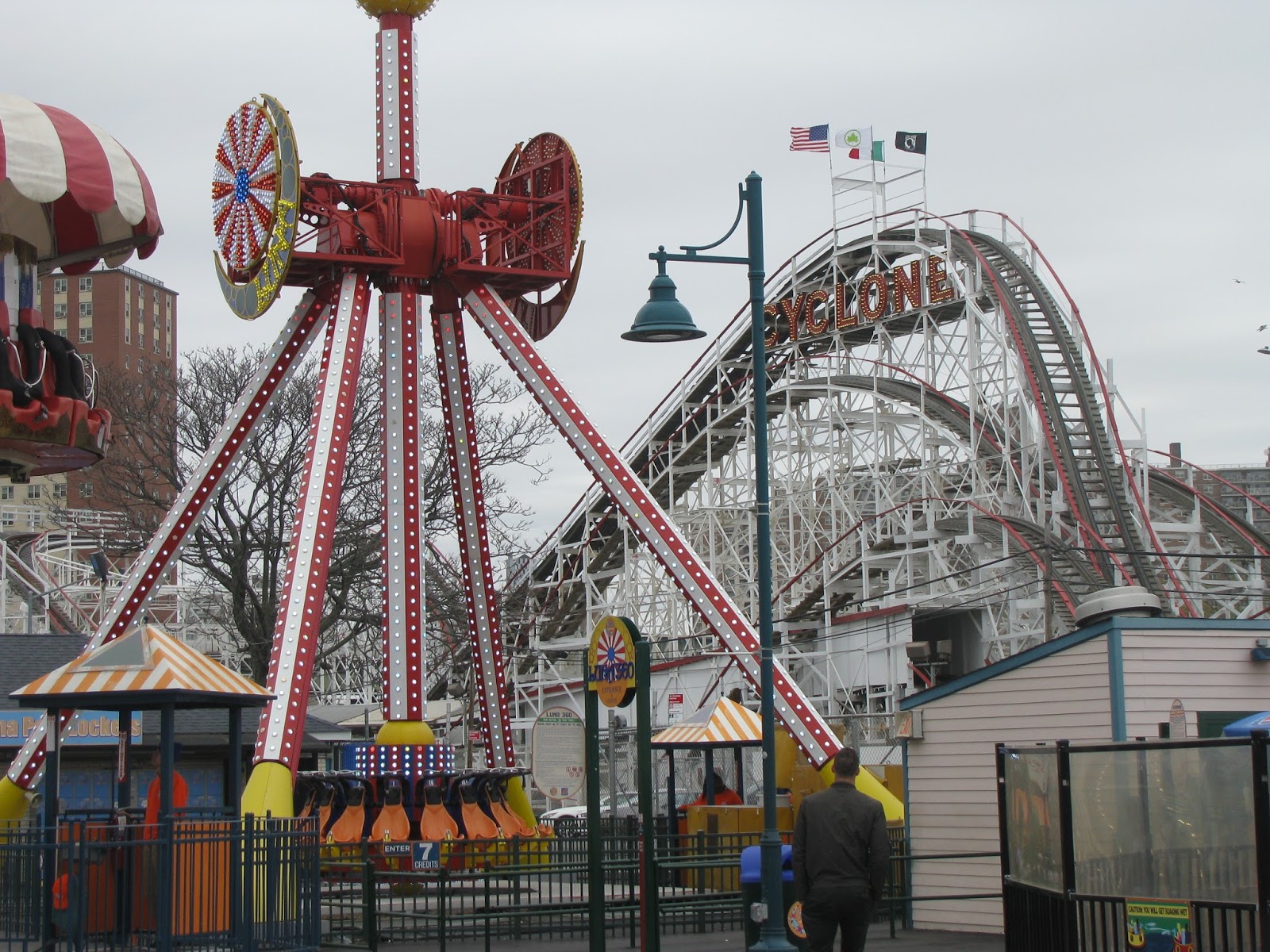
The rest of Coney island is dominated by Luna Park, a sprawling fairground with more than a hint of Paignton to its character.  Central to the park is the Cyclone, a rattling old wooden rollercoaster from the heyday of the amusement park.  A piece of history in its own right, it is known locally as the "Big Momma," with more than 2,500 feet of track and 12 drops.  Would I ride it?  Probably not, for despite its decent safety record and multi-million dollar investment in recent years, it looks a bit too rickety and dated for my liking!


Time is running out.  Evening sets in and, back in Manhattan, we catch the subway to 42nd Street, for the short walk to the Circle Line cruise terminal.  For our last evening in New York, we've made the decision to see the whole of Manhattan from the water, and as dusk sets in, we brave a chilly wind on an open-top boat, which takes us down the Hudson, past Ellis, Liberty and Governors Islands, across the harbour, and up the East River.  Watching the sun set and night take hold over the New York skyline is a special sight, and a memory that will linger for a long time.  It's also the perfect round-up from our trip, for playing out in front of us is everything we we've seen and done - the Financial District, the Brooklyn Bridge, the UN, the Chrysler Building, Southstreet Seaport, Battery Park, the Williamsburg Bridge, the Empire State Building, the Statue of Liberty, and numerous others - bound together in this wondrous, magical city.  From here, I understand what Scott Fitzgerald was talking about, when he wrote, in The Great Gatsby“The city seen from the Queensboro Bridge is always the city seen for the first time, in its first wild promise of all the mystery and the beauty in the world.”  It provides the most fitting farewell and a fond reflection of our time, all the more so for us, as we leave the city having embarked on a new chapter in our own relationship, doubly enshrining our New York trip amongst our happiest of memories.  

Saturday, 27 May 2017

USA HQ

A raging thunder storm greets our introduction to early Saturday morning, shattering a dream in which I was waiting to drive to a Torquay away match (clearly I have troubling dreams.)  Drawing the curtains, we watch from the bed as lightning forks across the sky, and rain smashes down on the road far below.  It's 5.30am and it's time to get up.

Our destination is Penn Station, for the "Carolinian" Amtrak service to Washington DC.  The journey takes us three hours, calling along the way at Newark, Trenton, Philadelphia, Wilmington, Baltimore, which to my mind puts us through New Jersey, Pennsylvania, Delaware, and Maryland.  We're joined on board by a friendly conductor, who clearly likes a joke with his passengers - when he comes to scan our tickets, he says: "So it's Elizabeth going to Washington, and it looks like Nicholas gets off at Philadelphia."  Brief panic, then a laugh - I've been had!  We've also been joined on board by several climate change protesters, off to a demonstration in the capital - pertinent, given the current President.  Our Amtrak service is comfortable, roomy and speedy, and along the way we encounter some of the great rivers of the eastern seaboard, riding alongside the Delaware, and crossing the Susquehanna, Bush and Gunpowder.  We roll into Union station bang on time, and there's no immediate hurry to alight - the train is due for a half hour comfort stop, which makes sense when you consider that its final destination is Charlotte, North Carolina, a further ten hours' travel away.

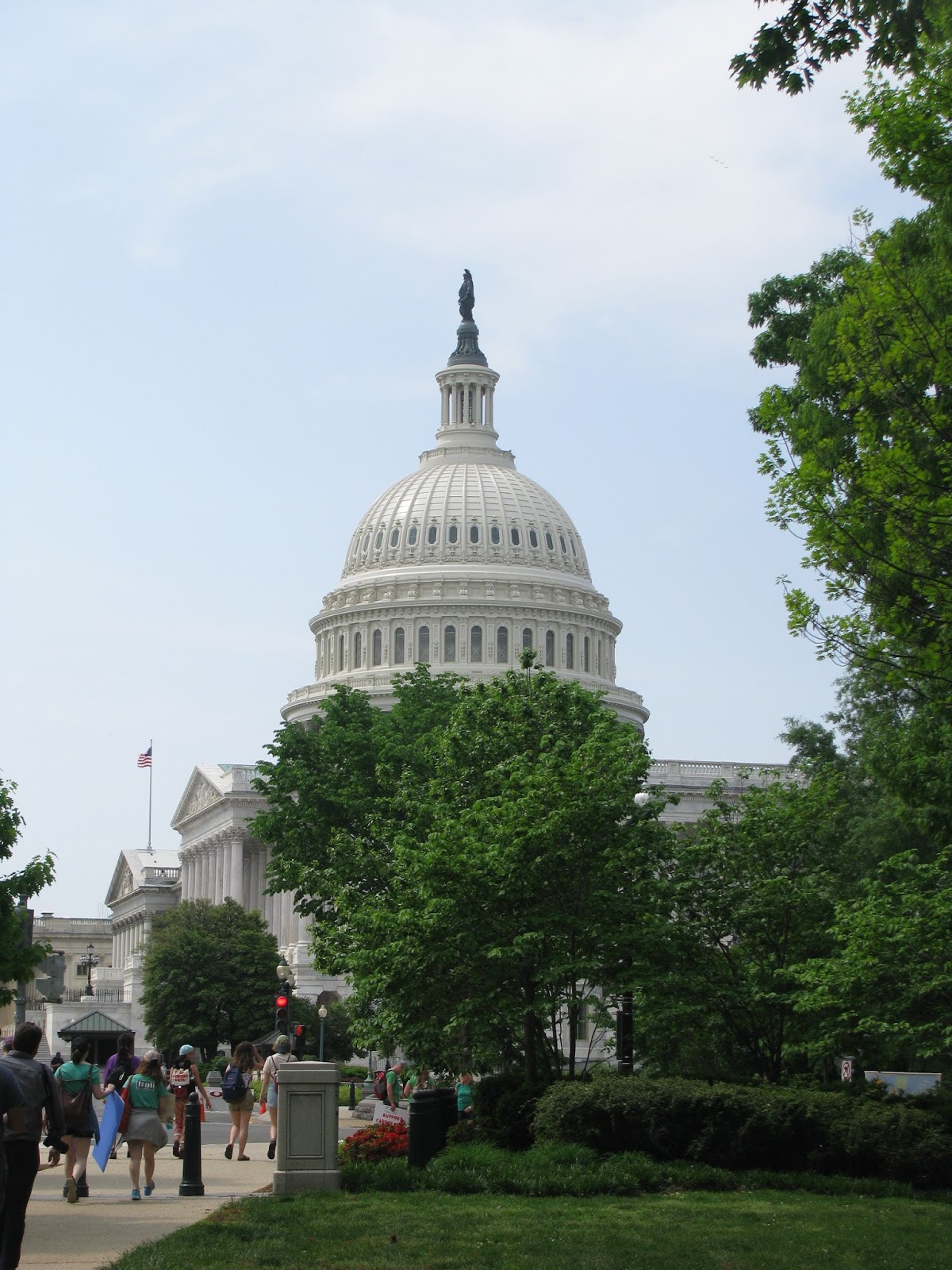
There's a need to be slightly diplomatic and a little bit sensible as we exit the station, eschewing the offers of placards and posters as we pick our way through the protests to the US Capitol Building.  The building is the home of the US Congress, and sits at the top of the National Mall, on what is called Capitol Hill.  From the bottom of the steps, we can survey virtually everywhere we intend to visit today, for our area is fairly contained.


The Mall is flanked on both sides by the numerous buildings of the Smithsonian Institute, the world-famous free museums housing everything Americana.  We've agonised over which museum to visit, but finally decide upon the National Air and Space Museum.  The choice is not a disappointment, for within these walls are great, historic and significant items.  We're quite short of time, so we earmark the most interesting of the galleries, seeing along the way the Hubble Space telescope, the Apollo-Soyuz test project and astronaut spacesuits.  Outside the spaceflight galleries, the pioneers of flight are celebrated - Charles Lindbergh's Spirit of St Louis, the plane that made the first solo non-stop transatlantic flight in 1927, is here, as is Amelia Earhart's Lockheed 5B Vega, in which she became the first woman to fly non-stop across the Atlantic five years later.  Another of the great aviators, Howard Hughes, is represented by the Hughes H-1 Racer, which set both a world airspeed record and a record for the fasted flight across the United States.  But topping even these icons, sitting reverently in its own gallery, is the one that started it all - the Wright brothers' plane which, on 17 December 1903, was powered 20 feet above a North Carolina beach for twelve seconds, in the process changing our world forever.


The Spirit of St Louis
The Wright Brothers' plane (caveat - the canvas is a reproduction)

Back outside, and in a really punishing heat, we start our long walk down the Mall, stopping off at a catering van for a Philly cheese steak sandwich, which we eat in the cooling shade of nearby trees.  Looking down the mall, the famous Washington Monument dominates the vista, a giant needle dedicated to the memory of George Washington.  The monument took some time to build, for having begun in 1848, it was not completed until 1888, due to lack of funds and the intervention of the American Civil War.  On completion, it was the world's tallest structure, an accolade it held until the Eiffel Tower was completed in 1889.  Nowadays, it is the world's tallest stone structure and the world's tallest obelisk, at around 555 feet.


The Washington Monument
Feeling warm on the National Mall
Beyond the Washington Monument, the National Mall gives way to the World War II Memorial's massive fountains and pool - in which people are dipping their toes - and the Lincoln Memorial Reflecting Pool, which film-lovers will remember fondly from Forrest Gump.  By the time we get here, we are seriously over-heating, sweat pouring off us - and everyone else.  Undeterred, however, we plough on, for there is one more must-see sight, which has been on my list for many years - the Lincoln Memorial.  Standing in the form of a classic Greek temple, the memorial is America's great "thank you" to one of its greatest presidents.  I leave Lizzie on a shady spot of grass, and hike the steps in sun-stroked delirium, passing through the colonnades and into the cool and shady interior.  Up above, the face of Honest Abe looks out over his capital, observing the same view that Martin Luther King Jr saw in August 1963, when he gave his I Have A Dream speech from the very steps on which I stand.  For me, it is a moment of happiness, admiration and reflection - I've finally made it here.


The Lincoln Memorial
The 16th President, Abraham Lincoln

Our walk back to the railway station - back up the Reflection Pool and the National Mall - is equally exhausting, but there is at least one more distraction to help keep our mind off the heat.  Not that we can get anywhere near the house at 1600 Pennsylvania Avenue, but straining for a view across the park and through the trees, we can make out the most famous address on Earth, the White House.  It certainly looks like an amazing place to live, and you can only imagine the comings-and-goings of so many presidents - Lincoln, Roosevelt, Kennedy, Reagan to name only a few- and the decisions they made from within those walls, which impacted so many, both in positive and negative ways.  I suppose that's a good thought to sum up Washington DC - it is the ultimate seat of world power.


The White House

Wednesday, 24 May 2017

Spanning the rivers, scraping the skies

Returning from our Statue of Liberty cruise, we stroll through the financial district and down the historic Wall Street, with its curious mix of bankers and tourists.  This is the command centre for the world economy, and what happens here has a frightening baring on everybody in the world, at least to some degree.  When the stock market crashed here in 1929, it caused a cataclysmic series of events that ultimately shoulders much responsibility for the onset of the Second World War.  Nonetheless, the mood is jovial enough, but with a definite air of purpose absent from other parts of the city.  Wall Street is also home to Federal Hall, the site of the very first capitol building of the United States, where George Washington was inaugurated as the first President, and where the Bill of Rights was first introduced to Congress.  The original building was razed in 1812, and the current structure completed in 1842, built as a customs house.

Wall and Broad Street
Federal Hall

Our destination is the Brooklyn Bridge, which crosses the East River and connects Lower Manhattan with (funnily enough) Brooklyn.  When it opened in 1883, it was the longest suspension bridge in the world, and was dubbed "the eighth wonder of the world." Still a magnet for tourists like us, and a lifeline for local commuters, the bridge carries 150,000 vehicles and pedestrians every single day.  From end-to-end, it's just over a mile to walk, which is slightly terrifying if, like me, you suffer from heights and the occasional bout of vertigo.  Nonetheless, the opportunity to cross such a noteworthy landmark cannot be passed up, and so we approach, step-by-step, until we're well over the river.  To the north sits the nearby Manhattan Bridge, whilst a 180-degree turn reveals the splendour of the city in all its glory - skyscrapers aplenty, all merging together beyond a mesh of thick cables that keep us on the level over the East River.


The Brooklyn Bridge
Looking back at Manhattan

Brooklyn sits on the east side of the East River, and is one of the five boroughs that make up New York City (the other four, for future pub quizzes, are Manhattan, Queen's, the Bronx, and Staten Island.)  It's actually quite a sizeable borough, so large in fact that if it were a stand-alone city, it would be the seventh largest in the US.  We content ourselves, after our mammoth walk across the famous bridge, with a stroll around Brooklyn Heights, a residential neighbourhood by the water, with commanding views of Downtown Manhattan.  There's a atmosphere of Sesame Street about the place, with its brownstone rowhouses and well-maintained roads, aided by the fact that it's clearly kick-out time in the local school, and kids are running around the little playgrounds, and queuing up at the local ice cream van.  Adjacent to this neighbourhood sits Brooklyn Bridge Park, where the water laps up against the shore, and swanky new apartments take shape with million dollar vistas.  It's a little escape, a brief shelter from the bustle of the city, which is just across the river, but feels many miles away.


Brooklyn Bridge Park

Back in Manhattan and all-too-briefly rested, we set out for another of New York's engineering marvels, the Empire State Building.  The building is named after the nickname for New York State - the Empire State - and was completed in 1931, when it instantly became the world's tallest building, a record it held until the 1970s, and the introduction of the World Trade Centre twin towers.  Nowadays it is the world's 34th-tallest, but few of its rivals can match the location and history of this truly magnificent structure.


The Empire State Building from 34th Street

Like many of its companion skyscrapers, the Empire State Building was a child born of the roaring twenties, when money was easy, and dreams attainable.  New York's economy was booming, and a frenzied competition was underway to see who could build the world's tallest building, with the Bank of Manhattan's 40 Wall Street Building up against the Chrysler Building, conceived by motor mogul Walter Chrysler. Then, in August 1929, General Motors executive John J Raskob and New York Governor Al Smith announced a third major player in the race - the Empire State Building.  Of course, it surpassed both its rivals to take the crown, but as its completion coincided with the Great Depression, much of the building space went unrented, and New Yorkers quipped that it was in fact the Empty State Building.  This was certainly not the case on our visit, and it seemed like half the city was indeed in the queue, which (it has to be said) lacked a little organisation and coherence.  Nonetheless, we do eventually emerge on the 86th floor, and in the evening air, the lights of the city glowing in all directions ensures a magical experience.  We are in awe, for it's as if the whole city finally makes sense when viewed from here.  Maddison Square Garden lies directly below, the Chrysler Building and its beautiful roof is a few blocks away, the bridges in the distance, like fairy lights twinkling in the night.  The visitor can actually go even higher here, up the spire to the 102nd floor, an add-on to the original design of the building, built so that air ships could dock.  It's an amazing idea to take away, and one that perfectly sums up the 1930s experience in this most celebrated of locations.

Views from the 86th floor